
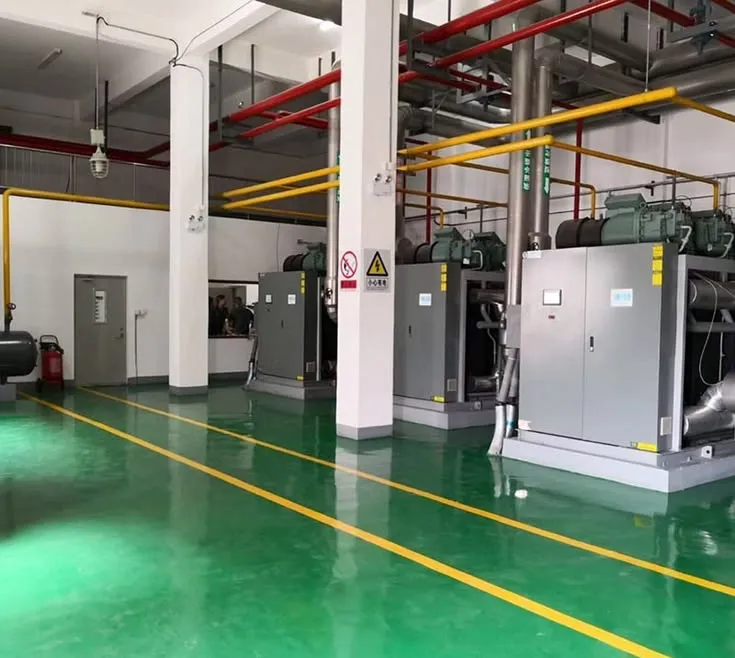
Chiller plant rooms support heavy, service-intensive equipment in commercial buildings. Chillers, pumps, piping, expansion tanks, valves, and water-treatment systems can expose floors to condensation, maintenance water, glycol, oils, and technician traffic. These spaces combine large equipment loads with wet service conditions and narrow access routes. Flooring should therefore be planned around the cooling system itself, not treated as a generic concrete finish.
Cooling Equipment Creates Persistent Moisture
Chilled-water systems operate around cold piping and equipment, which can create condensation when insulation or seals are imperfect. Maintenance work can also introduce water around pumps, valves, strainers, and drain points.
Facility teams should identify areas that remain damp most often and determine whether moisture comes from condensation, routine service, or an equipment problem. A resinous floor can help protect concrete, but it should not substitute for correcting leaks or failed insulation.
Glycol and Treatment Chemicals Need Consideration
Some chilled-water systems use glycol or water-treatment products during normal operation. These substances may reach the floor during maintenance, draining, or equipment replacement.
Facilities researching Mechanical Room Flooring In Usa should provide contractors with a realistic list of service fluids used in the plant. Chemical type, concentration, temperature, and contact time can influence resin-system and topcoat selection.
The phrase “chemical resistant” is most useful when tied to the actual products present.
Equipment Bases Limit Preparation Access
Large chillers and pumps often sit on housekeeping pads or structural bases that interrupt the floor. These edges can collect moisture and residue, while tight clearances make preparation more difficult.
Open concrete may be easy to grind, but areas around pad edges, anchor bolts, pipes, and equipment supports often require smaller tools or hand work. Old coatings, weak patches, or contamination should not remain simply because the area is difficult to reach.
Service Carts Need Smooth Routes
Technicians may use tool carts, pumps, hoses, filters, or replacement components during service. These items often travel through the same narrow routes between equipment.
Small wheels can make cracked joints, rough patches, or uneven transitions more noticeable. Floor repairs should therefore consider maintenance mobility as well as foot traffic.
A smooth service route can make it easier to move equipment without repeatedly striking the same defects.
Drainage Should Be Reviewed Before Resurfacing
Chiller rooms may contain floor drains for maintenance water or minor leaks. The floor should direct liquids toward these points rather than allow standing water beneath machinery.
Managers should observe how water moves during normal service and note low spots. Cracked drain surrounds or failed patches should be repaired before a new resinous system is installed.
A coating can create a continuous finish, but significant slope problems still need substrate-level correction.
Texture Must Balance Grip and Cleanup
Condensation and service fluids can make some sections slippery, so practical traction matters. However, an excessively rough surface can make glycol, oil, and maintenance residue harder to remove.
An Epoxy Floor Installer In Green Brook should consider employee footwear, cleaning methods, wheeled carts, and the room’s wettest zones before recommending texture.
Different areas may justify different surface profiles rather than one aggressive finish throughout the plant.
Shutdown Windows Can Create Renovation Opportunities
Chillers are often serviced during seasonal changeovers or planned maintenance periods. These windows can provide an opportunity for flooring work while equipment is offline or partially isolated.
Project teams should coordinate concrete repair, preparation, resin application, curing, and equipment access with the mechanical schedule. Rushing the floor simply to restore plant operation can create avoidable problems.
The flooring plan should fit the maintenance window without compromising required installation steps.
Routine Service Can Double as Floor Inspection
Chiller-plant maintenance already involves regular equipment checks, making it easy to add floor inspection to the same routine.
Technicians can watch for new staining, cracks, open edges, worn texture, or damage around pumps and drains. Repeated problems in one location may indicate a leak, vibration issue, or substrate weakness.
Early attention can keep small defects from becoming larger repairs.
Conclusion
Chiller plant rooms combine large equipment, condensation, glycol, water-treatment chemicals, drains, carts, and narrow service routes within one demanding environment. These conditions make flooring performance closely connected to how the cooling system is operated and maintained.
A stronger flooring strategy begins with the plant layout and service routine. Proper substrate preparation, chemical compatibility, functional drainage, smooth maintenance routes, practical texture, and coordinated shutdown scheduling can create a more manageable surface while helping protect concrete around critical cooling equipment.