
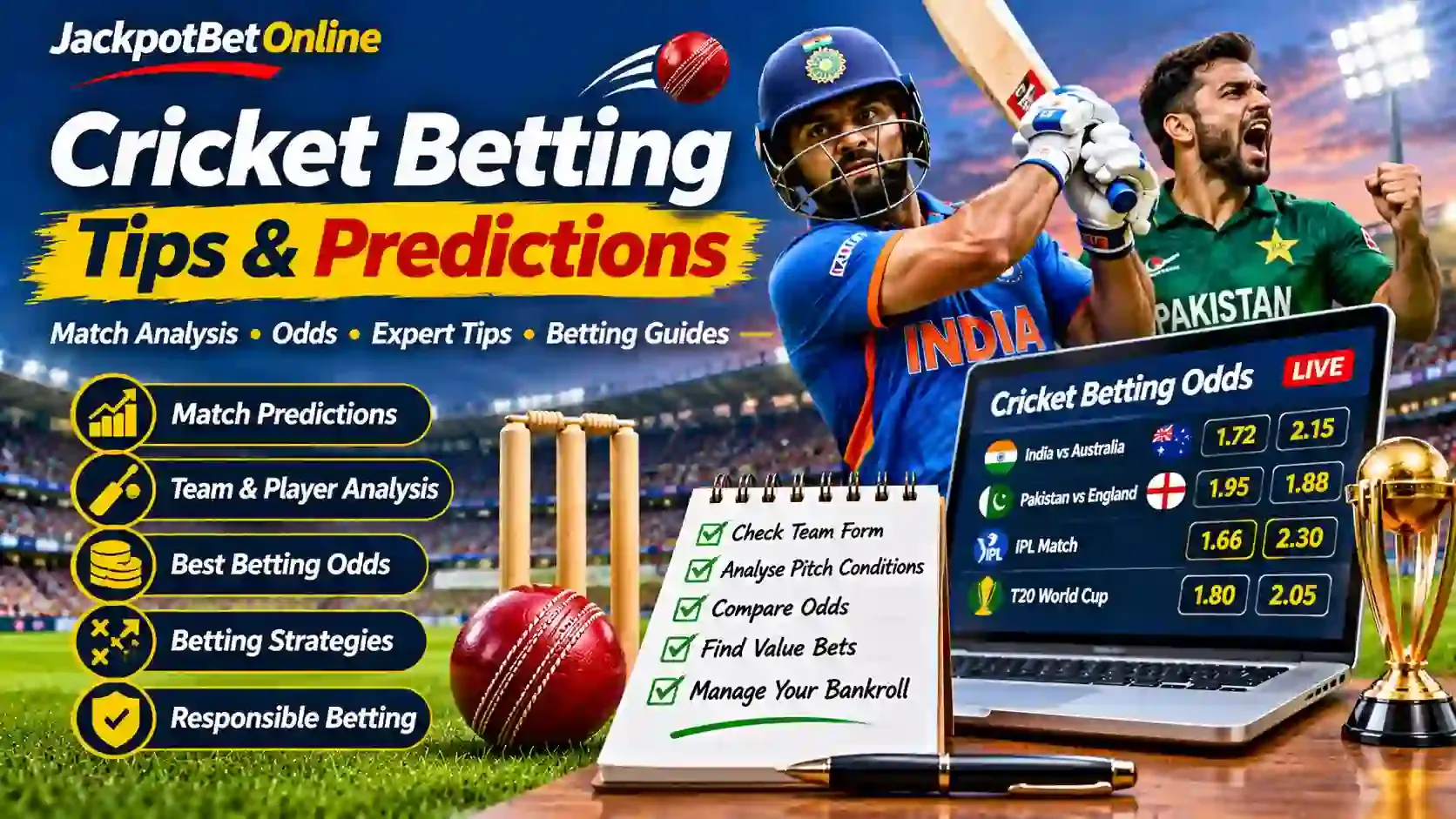
Choose the right market before you pick a side
Serious bettors don’t start with teams—they start with the market. If you only look for who will win, you ignore opportunities in props like top batsman, top bowler, totals, and partnerships. Markets reward different skills: match-winner betting Cricket betting tips leans on overall strength, while player props can reflect form, role clarity, and matchup advantages. When you align your research with the market type, your decisions become more consistent and less emotional.
Before placing any bet, confirm what each market is actually measuring. “Total runs” and “innings totals” depend heavily on batting order, bowling depth, and the expected pace of the game. “Over/under” markets can shift quickly based on powerplay efficiency or late-innings hitting, so your analysis should focus on phases, not just final scores. If you’re betting live, decide in advance which signals would change your plan, such as wickets falling at unusual intervals or a captain changing batting tempo.
Build a shortlist using form, conditions, and roles
To make effective decisions, you need a repeatable checklist that connects team and player context to betting outcomes. Start with recent form across the same format, then validate it with role-specific evidence like strike rate trends, bowling workload, and how often key players are used in the most important overs. For example, a bowler who regularly bowls the death overs often carries higher value in top bowler and wickets markets. Likewise, an opener with a stable technique can be more relevant to opening partnership bets than a middle-order hitter who often comes in after early wickets.
Next, analyze pitch and weather because cricket outcomes are extremely sensitive to conditions. A slower surface tends to increase dot balls and reduce boundary frequency, which can push totals downward and make innings-based bets more attractive. If the forecast suggests rain interruptions, you should think through revised targets and how Duckworth-Lewis-style adjustments can reshape risk. Don’t ignore injuries and squad rotation either; a replacement batter might look capable on paper but could face a different role, batting position, or bowling strategy from the opposition.
Use head-to-head and lineup logic to reduce uncertainty
Head-to-head stats can be useful, but only when you treat them as context rather than a prediction engine. Compare matchups that matter, such as whether the bowling style has historically troubled the opponent’s top order. Also check whether the previous meetings involved similar squads and conditions, because a strong lineup today can be irrelevant if key players were absent in earlier games. When you combine head-to-head with current form and fitness, you can spot when a trend still has meaning.
Lineup logic often provides the clearest buyer-intent edge. Look for how the batting order is likely to unfold: who anchors, who accelerates, and who finishes. If a team has two specialist hitters but lacks depth in the middle, totals may be vulnerable if early wickets disrupt the plan. In bowling, consider whether the team has reliable wicket-taking options across overs, not just an expensive strike bowler. That affects bets like wickets or top bowler, where the distribution of overs can matter as much as raw skill.
Evaluate odds for value, not just outcomes
Many bettors chase “best teams” and ignore pricing, but odds determine whether a bet is potentially profitable. Start by comparing bookmaker lines across markets to see where you might be getting a better price for the same underlying idea. If one site offers a higher price on a player prop while the reasoning is identical, that’s an immediate signal to investigate. Value betting doesn’t mean overconfident picks—it means aligning your probability estimate with the odds available.
To estimate probability responsibly, break the game into drivers: scoring rate, wicket likelihood, and tactical patterns. For totals, consider expected powerplay tempo and how many overs each team can realistically bat through without collapsing. For top batsman or top bowler, focus on usage and opportunity, such as overs likely faced or bowled, plus the role consistency of those players. Even if you can’t forecast a perfect result, you can often identify whether the market is overreacting to hype or underpricing a matchup advantage.
Conclusion
Treat every bet like a business decision: define the market, verify the matchup logic, and connect conditions and roles to the outcome you’re targeting. When you research beyond team names—into pitch behavior, batting order structure, and bowling over patterns—you reduce avoidable guesswork. Always remember that no prediction or strategy can guarantee wins in cricket, because variance is part of the sport. Use bankroll management, avoid chasing losses, and set limits that protect you if results don’t go your way. If you want clearer betting education, focus on trustworthy analysis, transparent explanations, and responsible wagering guidance before committing your funds.